


Did you know that businesses using data-driven marketing are six times more likely to be profitable year-over-year? This striking statistic underscores the transformative power of data analytics in the realm of digital marketing. This blog delves into the pivotal role of data analytics in enhancing digital marketing campaigns. We will explore its definition, benefits, key tools and techniques, implementation strategies, and future trends.
Understanding Data Analytics in Digital Marketing
Data analytics involves the process of examining raw data to draw actionable insights. In digital marketing, it helps in understanding customer behaviour, measuring campaign performance, and refining marketing strategies.
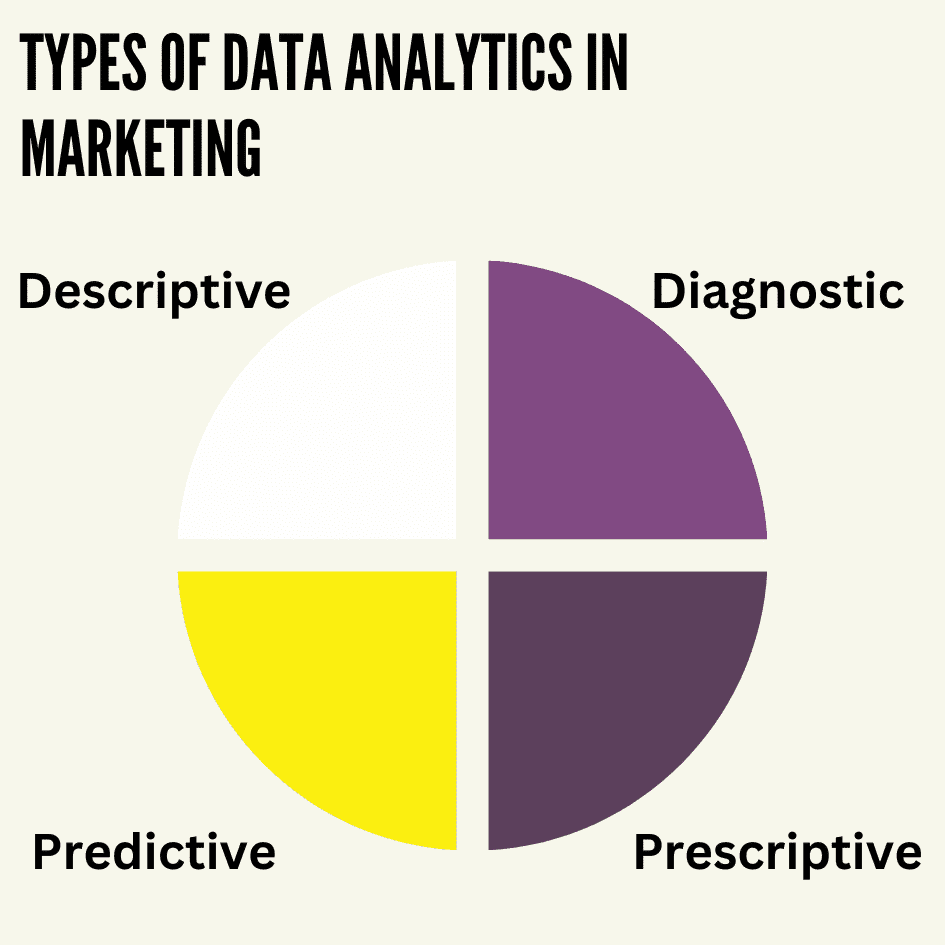
Types of Data Analytics:
- Descriptive Analytics: Analyses historical data to understand what has happened in the past. It is crucial for reporting and summarising past campaign performances.
- Diagnostic Analytics: Explores why certain outcomes occurred by analysing data patterns and relationships. It helps in identifying reasons behind a campaign’s success or failure.
- Predictive Analytics: Utilises historical data to predict future trends and behaviours. It aids marketers in forecasting customer actions and market trends.
- Prescriptive Analytics: Provides recommendations based on data analysis to optimise decision-making processes. It is used to determine the best strategies and actions for future campaigns.
Benefits of Data Analytics in Digital Marketing
Enhanced Targeting and Personalisation: Data analytics enables marketers to understand customer preferences and behaviours, leading to more personalised and targeted marketing efforts. By analysing data from various touchpoints, marketers can create highly relevant content that resonates with their audience.
Improved Decision Making: Data-driven insights empower marketers to make informed decisions. By understanding what works and what doesn’t, marketers can optimise their strategies and allocate resources more effectively.
Increased ROI: Effective use of data analytics can significantly boost return on investment. By identifying high-performing strategies and areas needing improvement, marketers can maximise their campaign outcomes and reduce wasteful spending.
Key Data Analytics Tools and Techniques
Tools Overview: Some popular data analytics tools in digital marketing include:
- Google Analytics: A comprehensive tool for tracking and analysing website traffic and user behaviour.
- Adobe Analytics: Provides deep insights into customer journeys across various channels.
- HubSpot: Offers analytics for inbound marketing efforts, including lead generation and content performance.
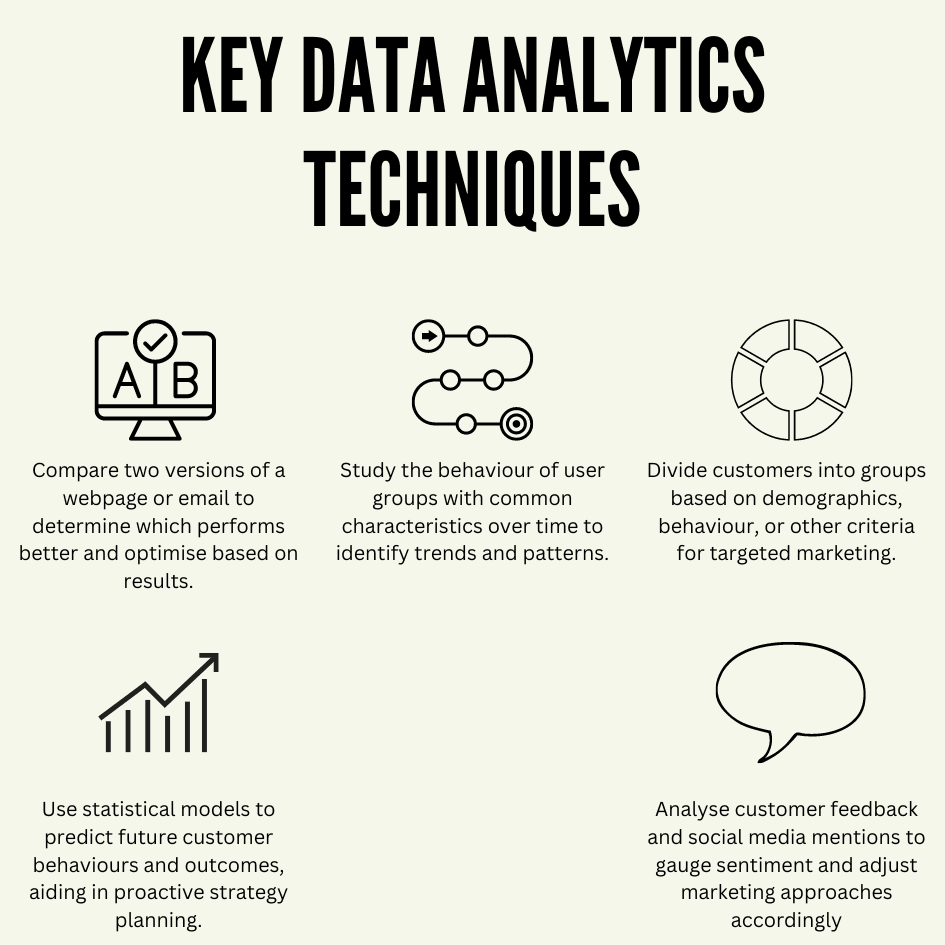
Techniques:
- A/B Testing: Compares two versions of a webpage or email to see which performs better.
- Cohort Analysis: Studies the behaviour of groups of users with common characteristics over time.
- Customer Segmentation: Divides customers into groups based on demographics, behaviour, or other criteria for targeted marketing.
- Predictive Modelling: Uses statistical models to predict future customer behaviours and outcomes.
Implementing Data Analytics in Digital Marketing
Data Collection: Gathering relevant data from various sources, such as website analytics, social media platforms, and email campaigns, is the first step. Ensuring the data is accurate and comprehensive is crucial.
Data Processing and Analysis: Once collected, the data must be cleaned, processed, and analysed to extract meaningful insights. This involves removing inconsistencies, formatting data correctly, and applying analytical techniques.
Actionable Insights: The final step is translating data insights into actionable marketing strategies. This could involve adjusting targeting, personalising content, or reallocating budget to high-performing channels.
Challenges and Considerations
Data Privacy and Security: Adhering to data privacy regulations like GDPR and CCPA is paramount. Ensuring data security to protect customer information is also crucial.
Data Quality: Maintaining high data quality is essential for accurate analysis. Poor-quality data can lead to misguided strategies and ineffective campaigns.
Skillset and Resources: Implementing data analytics requires skilled professionals and appropriate resources. Investing in training and the right tools is necessary for success.
Future Trends in Data Analytics for Digital Marketing
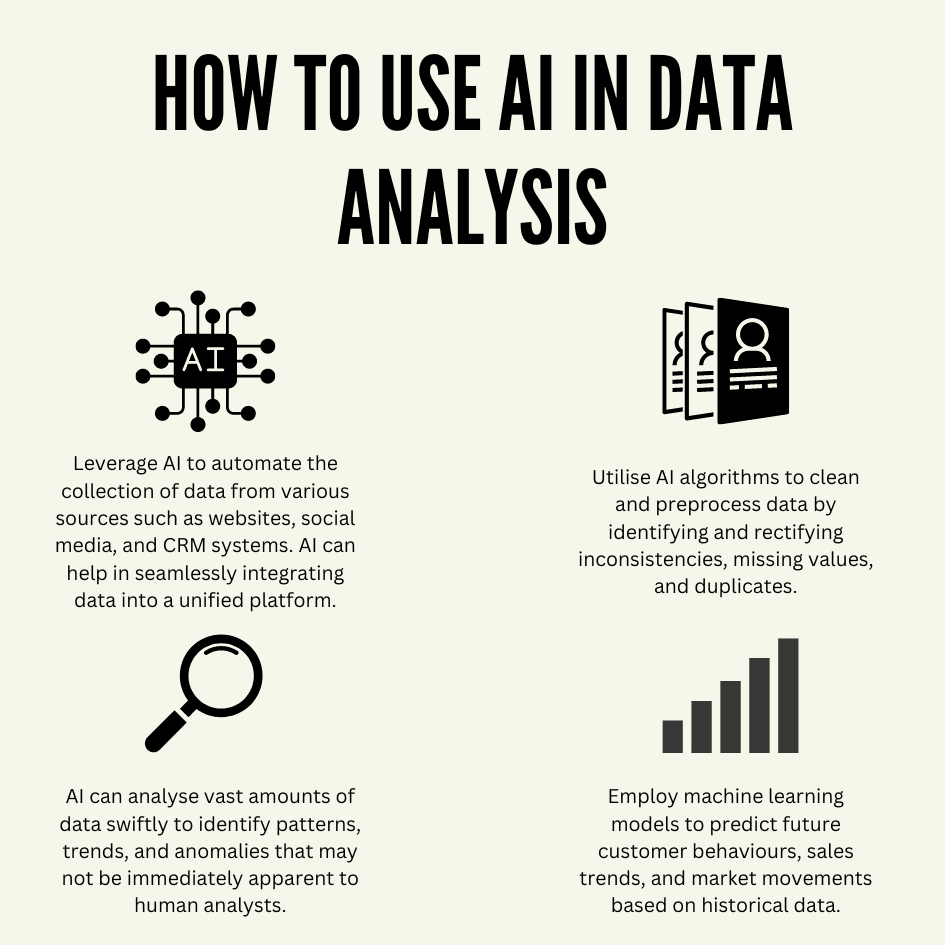
AI and Machine Learning: The integration of AI and machine learning is revolutionising data analytics, enabling more advanced and accurate insights.
Real-Time Analytics: The demand for real-time analytics is growing, allowing marketers to respond swiftly to changes in customer behaviour and market trends.
Predictive and Prescriptive Analytics: These advanced forms of analytics will continue to shape the future of digital marketing, offering deeper insights and more precise recommendations.
Conclusion
Data analytics plays a crucial role in shaping effective digital marketing campaigns by enhancing targeting, improving decision-making, and increasing ROI.
Embrace data analytics to transform your digital marketing efforts. Consider exploring our upcoming webinar or request a free consultation to learn how data-driven strategies can benefit your business.
Found this useful? Put it to work on your business.
Get your free audit