
In the realm of digital marketing, email remains one of the most effective channels for engaging customers and driving conversions. However, with the sheer volume of emails flooding inboxes daily, standing out requires more than a catchy subject line. Personalisation in email marketing has emerged as a powerful strategy to capture attention and build meaningful relationships with recipients. This blog post delves into the benefits of personalisation in email marketing and offers insights on how to implement it effectively.
What is Email Personalisation?
Email personalisation involves tailoring email content to individual recipients based on their preferences, behaviours, and demographics. This can range from using the recipient’s name in the subject line to creating custom content that addresses their specific interests and needs.

Why is Personalisation Important?
Enhancing Customer Experience
Personalised emails make recipients feel valued and understood. When customers receive content that is relevant to them, it creates a positive experience, fostering a stronger connection with the brand. This, in turn, can lead to increased loyalty and higher engagement rates.
Boosting Engagement Rates
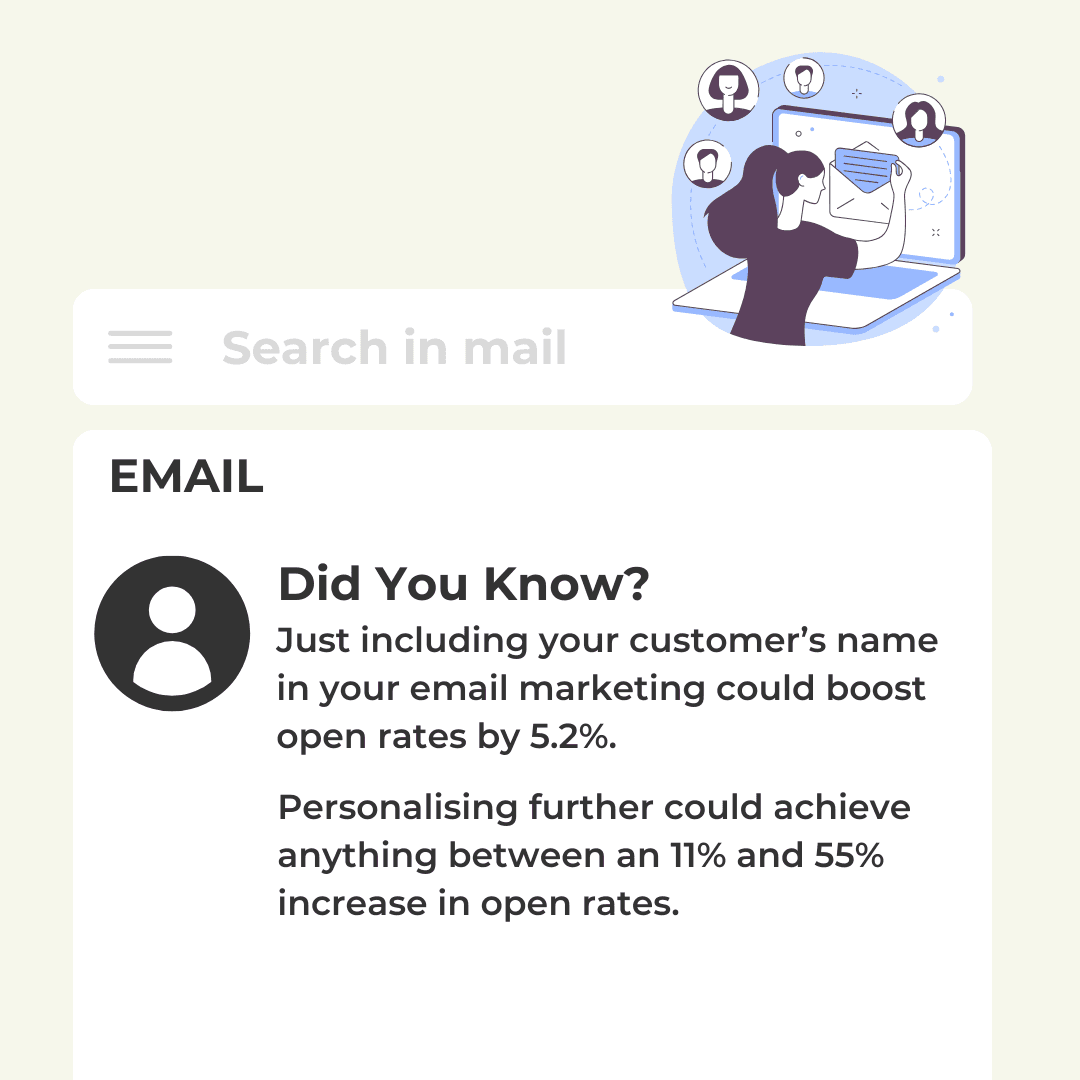
Personalised emails often result in higher open and click-through rates. Personalised subject lines are more likely to be opened. By delivering content that resonates with the recipient, businesses can significantly improve their email performance metrics.
Increasing Conversion Rates
When emails are tailored to address the specific needs and preferences of recipients, they are more likely to take the desired action, whether it’s making a purchase, signing up for a webinar, or downloading a resource. Personalisation can therefore lead to higher conversion rates and ultimately, increased revenue.
Reducing Unsubscribe Rates
Irrelevant content is a common reason for unsubscribes. By personalising emails, businesses can ensure that their content is pertinent to the recipient, reducing the likelihood of them opting out of the email list.
Types of Email Personalisation
Basic Personalisation
This includes simple tactics like using the recipient’s name in the subject line or email body. It’s a basic yet effective way to capture attention and make the email feel more personal.
Behavioural Personalisation
This involves tailoring content based on the recipient’s past behaviour. For example, if a customer has previously purchased a certain product, they can be sent emails with recommendations for similar items.
Demographic Personalisation
Using demographic information such as age, gender, or location, businesses can create targeted email campaigns that are more likely to resonate with specific segments of their audience.
Transactional Personalisation
Emails that are triggered by specific actions, such as a purchase confirmation or a cart abandonment reminder, can be personalised to enhance the customer experience and encourage further engagement.
How to Implement Email Personalisation
Collect and Analyse Data
To personalise emails effectively, businesses need to collect relevant data about their customers. This can include purchase history, browsing behaviour, and demographic information. Analysing this data can provide insights into customer preferences and behaviours, which can then be used to create personalised content.
Segment Your Audience
Segmentation involves dividing your email list into smaller groups based on specific criteria, such as past purchases, engagement levels, or demographic information. This allows businesses to send more targeted and relevant emails to each segment.
Use Personalised Subject Lines
The subject line is the first thing recipients see, so it’s crucial to make it engaging. Including the recipient’s name or referencing their past behaviour can make the subject line more appealing and increase the likelihood of the email being opened.
Customise Email Content
Personalised content goes beyond using the recipient’s name. It involves creating email content that addresses the recipient’s specific interests and needs. This could include product recommendations based on past purchases, personalised offers, or content that aligns with their browsing behaviour.
Leverage Automated Workflows
Automated workflows can help streamline the personalisation process. By setting up automated email sequences based on specific triggers, businesses can ensure that personalised emails are sent at the right time, enhancing the customer experience and driving engagement.
Case Studies: Success Stories of Email Personalisation
Amazon
Amazon is renowned for its personalised email marketing strategies. By leveraging data on customer purchases and browsing behaviour, Amazon sends highly targeted emails with product recommendations tailored to each individual. This approach has significantly boosted their engagement and conversion rates.
Spotify
Spotify uses personalisation to enhance the user experience by sending customised playlists and recommendations based on the user’s listening history. These personalised emails not only engage users but also encourage them to explore new content, increasing their time spent on the platform.

Challenges and Solutions in Email Personalisation
Data Privacy Concerns
With increasing concerns over data privacy, businesses must ensure they handle customer data responsibly. Implementing robust data protection measures and being transparent about data usage can help build trust with customers.
Data Management
Managing and analysing large volumes of data can be challenging. Investing in advanced analytics tools and platforms can help businesses effectively manage customer data and derive actionable insights for personalisation.
Balancing Personalisation and Automation
While automation is essential for scalability, it’s crucial to ensure that automated emails still feel personal and relevant. Regularly reviewing and updating automated workflows can help maintain a high level of personalisation.
Future Trends in Email Personalisation
Artificial Intelligence and Machine Learning
AI and machine learning are set to revolutionise email personalisation. These technologies can analyse vast amounts of data in real-time, enabling businesses to deliver hyper-personalised content that evolves with the customer’s behaviour and preferences.
Predictive Analytics
Predictive analytics can help businesses anticipate customer needs and behaviours, allowing for even more personalised and timely email campaigns. This proactive approach can enhance customer satisfaction and drive higher engagement.
Interactive Emails
Interactive elements such as polls, surveys, and dynamic content can further personalise the email experience. These elements engage recipients in real-time, providing a more immersive and personalised interaction.
Conclusion
In an increasingly competitive digital landscape, personalisation in email marketing is no longer a luxury but a necessity. By delivering relevant, tailored content, businesses can enhance customer experience, boost engagement, and drive conversions. As technology continues to evolve, the opportunities for personalisation will only grow, making it an exciting area for marketers to explore. By embracing personalisation, businesses can not only stand out in crowded inboxes but also build lasting relationships with their customers.
Found this useful? Put it to work on your business.
Get your free audit